200mm Ø
200 mm Bowl Feeder
Compact unit for small components such as screws, rivets, pins, caps and electrical parts.
BowlØ 200 mmToolingCustomPart sizeapprox. 2–15 mm
Enquire for 200 mm Manufacturer · Bhosari, Pune
Indian Vibratory System designs and builds bowl feeders from 200 to 500 mm, linear feeders, stock feeders, elevators and automation units, tooled to feed and orient your component, from our unit in Bhosari, Pune.

Bowl Ø 200–500 mm
We feed
01The IVS range
Bowl feeders orient the parts, linear feeders carry them, stock feeders and elevators keep the bowl full, and automation units hand each part to your process.

Sort loose parts and deliver them oriented, one by one.
Carry oriented parts to the machine and hold a buffer on the track.
A hopper that tops up the bowl automatically.
Lift parts from a floor-level hopper up to the bowl.
Escapements and pick-and-place to hand the part on.
02Vibratory bowl feeders
A vibratory bowl feeder takes loose components in bulk and delivers them correctly oriented, one by one, to your machine. Pick the bowl size by your component's size and the feed rate you need; we tool the track for your part.
Compact unit for small components such as screws, rivets, pins, caps and electrical parts.
General-purpose size for small to medium parts on assembly, tapping and packing lines.
For medium components and higher bulk capacity, such as bushes, bolts and automotive parts.
Our largest bowl, for bigger or heavier components and long unattended runs.

| Model | IVS-200 | IVS-300 | IVS-400 | IVS-500 |
|---|---|---|---|---|
| Bowl diameter | 200 mm | 300 mm | 400 mm | 500 mm |
| Coil power | 150 W | 200 W | 350 W | 500 W |
| Part size | 2–15 mm | 5–30 mm | 10–50 mm | 15–80 mm |
| Bulk capacity | 1.5 L | 3 L | 5 L | 8 L |
| Feed rate | up to 300/min | up to 200/min | up to 120/min | up to 80/min |
| Height | 250 mm | 300 mm | 350 mm | 400 mm |
| Weight | 15 kg | 25 kg | 45 kg | 65 kg |
Approximate, typical values; height and weight are without the stand. The exact track, lining, outlet and feed rate are set for each component. Send us a sample or drawing and we'll recommend the right model.
03How it works
Controlled vibration, a spiral track and tooling cut for your part: that's how a heap of loose components becomes a steady line of correctly oriented parts.
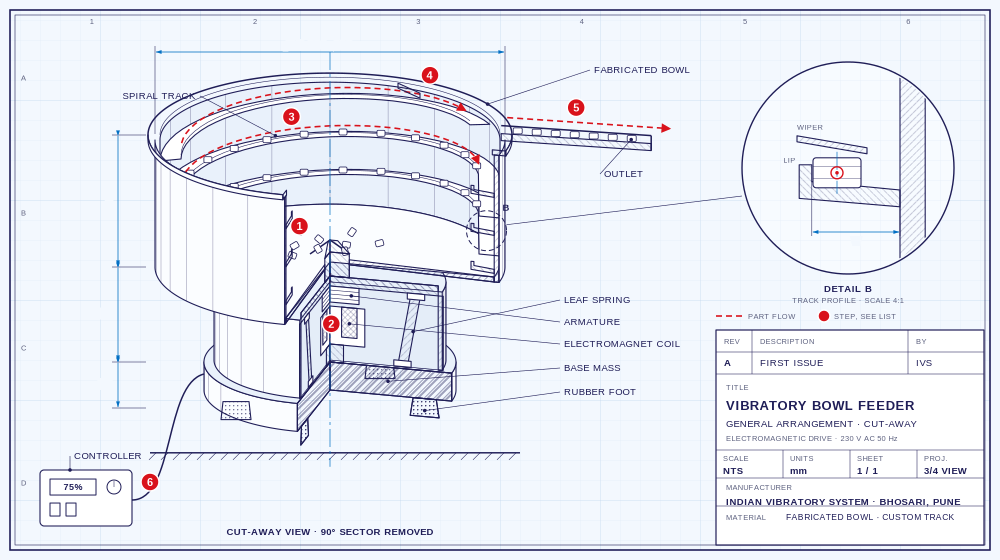
Loose components are tipped into the bowl, or topped up automatically by a stock feeder.
An electromagnetic drive under the bowl produces a fast, small vibration that makes parts climb.
The vibration walks the parts up the spiral track around the inside wall of the bowl, in single file.
Wipers, cut-outs and gates on the track knock wrongly oriented parts back into the bowl.
Only correctly oriented parts reach the outlet and move on to the linear feeder or your machine.
A feeder controller adjusts the vibration so parts arrive at the rate your machine needs.
04Bowl size guide
Four things decide the bowl size. Send us your component and we'll confirm the right one.
Larger and heavier parts need a larger bowl and a wider track.
The parts per minute your machine needs at the outlet.
How many parts the bowl should hold between refills.
How many sorting steps the tooling needs to present the part correctly.
| Bowl size | Typical components | Part size range | Bulk capacity |
|---|---|---|---|
| 200 mm | Small screws, rivets, pins, caps, electrical parts | approx. 2–15 mm | approx. 1.5 L |
| 300 mm | Small to medium parts for assembly, tapping and packing lines | approx. 5–30 mm | approx. 3 L |
| 400 mm | Medium parts: bushes, bolts, automotive components | approx. 10–50 mm | approx. 5 L |
| 500 mm | Bigger or heavier parts, long unattended runs | approx. 15–80 mm | approx. 8 L |
05Linear feeders
A linear feeder carries oriented parts from the bowl to your machine and holds a steady buffer on the track, so the line keeps running.

06Stock feeders, elevators & automation
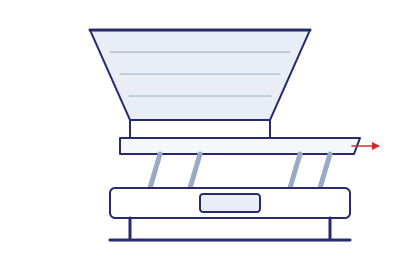
A bulk hopper that tops up the bowl automatically, so the bowl never runs empty and operators refill less often.
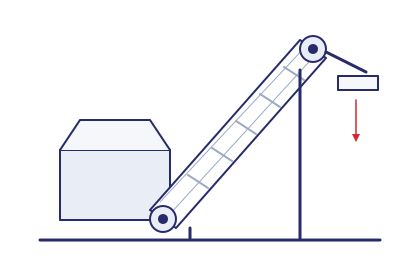
Lifts components from a floor-level hopper up to the bowl feeder for large batches.
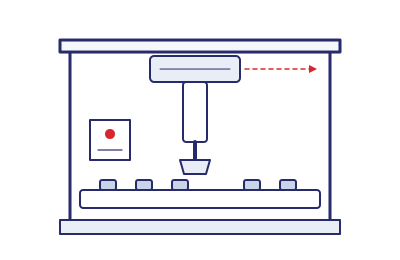
Escapements, pick-and-place and custom units that hand the fed part to your process.
07Which do you need?
They do different jobs and often work together. Here's how to tell which ones your line needs.
08Components we can feed
If it can be oriented, it can usually be fed. These are the parts we're most often asked about; send us yours.
Bronze, steel and sintered bushes, oriented by length or chamfer.
Bottle caps, plastic closures and lids, delivered open-side up or down.
Head-up or head-down feeding for tightening and assembly stations.
Solid, semi-tubular and pop rivets for riveting machines.
Compression springs, with tooling chosen to limit tangling.
Dowel, taper and roll pins fed end-to-end in a line.
Flat washers, spring washers and nuts, face-oriented.
Moulded plastic components, connectors and housings.
O-rings, grommets, seals and other rubber components.
Turned and pressed metal parts made to your drawing.
09Tooling & build
The bowl, track and tooling are what make a feeder work for one specific part. These are the options we set for each job.

Bowl and track material chosen for your component and environment.
SS304 · SS316 on requestLining options to protect delicate parts or reduce noise.
PU · rubber · nylonElectromagnetic drive matched to the bowl size and load.
Electromagnetic · 230 V ACController to set vibration amplitude and feed rate.
Digital, variable amplitudeClockwise or anti-clockwise, to suit your machine layout.
Set per jobTrack width and outlet height matched to your part and machine.
Set per job10Custom feeding systems
We can supply a single bowl feeder, or the whole chain from bulk storage to the part arriving at your machine, with every stage matched to the next.
Bulk storage that keeps the bowl topped up.
Sorts and orients the parts.
Carries parts and holds a buffer.
Separates one part and hands it on.
Assembly, tapping, pressing, packing.
11Applications
If a part has to reach a machine the right way up, a feeder can do it. Typical industries we're asked to feed:


12How we work
Send a photo, drawing or sample on WhatsApp, with the output orientation and feed rate you need.
Bowl size, linear feeder, hopper or elevator: we recommend what your part and line need.
The feeder is built and the track tooled in-house at our Bhosari unit.
Tested with your parts before dispatch, with support after installation.

13Photos & video
Our bowl feeders running, and the Bhosari workshop where we fabricate, machine and tool them.


14Getting a quote
The more we know about the part and the machine, the faster and more accurate the quote. A photo on WhatsApp is enough to start.
Ready?
We'll open WhatsApp with this checklist ready to fill in. Attach your photos or drawing and send.
Open checklist in WhatsAppOr call +91 96375 3360415Maintenance & support
A few simple habits keep a vibratory feeder feeding consistently. And if something changes on your line, we're a call away.
Oil, chips and dust change how parts climb. Wipe the bowl and track regularly and keep them dry.
An overfilled bowl feeds less smoothly. Keep it at the recommended level, or let a stock feeder top it up.
Use a rigid, level stand and keep the feeder away from other vibrating machines that can disturb the feed.
Look for wear on wipers, gates and track edges, and check that bolts and clamps are tight.
Change the vibration in small steps and note the setting that works for each part.
Changed the component or the feed rate? Talk to us first and we'll advise on adjusting or re-tooling.
16Service area
Our unit is in Bhosari, close to the MIDC areas around Pune. We visit, trial and support feeders across this belt.
Elsewhere in Maharashtra or in another state? Send us your requirement and location and we'll discuss supply.
17FAQ
Not answered here? WhatsApp us.
It's a machine that uses controlled vibration to move loose components up a spiral track inside a bowl. Tooling on the track rejects wrongly oriented parts, so parts leave the bowl one by one, all facing the same way, ready for your machine.
It depends on your component's size and weight and the feed rate you need. Small parts usually suit 200 or 300 mm bowls, larger parts 400 or 500 mm. Send us your component and we'll recommend the size.
Yes. Every bowl feeder is tooled for your specific part and the orientation you need at the output.
The bowl feeder sorts and orients parts. The linear feeder carries the oriented parts in a straight line to your machine and keeps a buffer on the track.
A photo or drawing of the component, its material and size, the orientation you need at the output, the parts per minute you need and the machine it will feed.
Our unit is at Basweshwar Industrial Complex, Vishweshwar Chowk, Sector 10, Bhosari, Pune 411026. We supply Pune, Pimpri-Chinchwad, Chakan, Talegaon, Ranjangaon and customers across Maharashtra and India.
Yes. We make stock feeders (hoppers), elevators and automation units, so you can get the complete feeding system from one supplier.
It depends on the component's size, shape and the orientation needed. Tell us the feed rate your machine needs and we'll size and tool the feeder for it.
You need one when the machine is some distance from the bowl outlet, or when you want a buffer of oriented parts queued at the pick point. For some layouts the bowl outlet can feed the machine directly.
Yes. We supply automation units such as escapements and pick-and-place units, and match the track width and outlet height to your machine so the feeding system fits your line.
Keep the bowl and track clean and dry, don't overfill the bowl, keep the feeder firmly mounted and level, check tooling and fasteners for wear, and adjust the controller in small steps. Call us before changing the component or re-tooling.
Our unit is in Bhosari, Pune, and we work with industry across the Pune belt. For customers elsewhere in Maharashtra or in other states, send us your requirement and location and we'll discuss supply.
18Get a quote
Your message opens in WhatsApp, ready to send to IVS.
 Indian Vibratory System
Have a part that needs feeding?